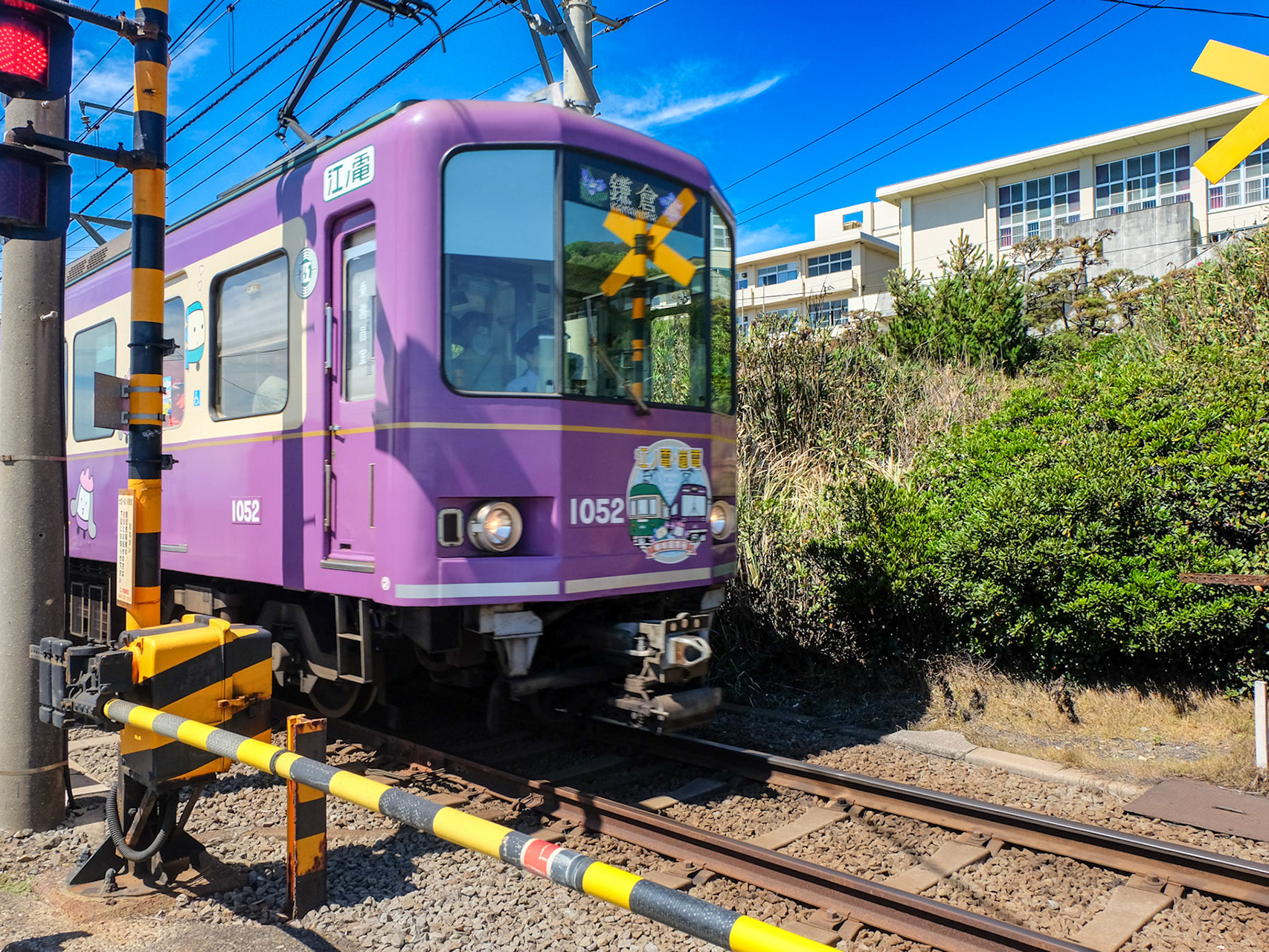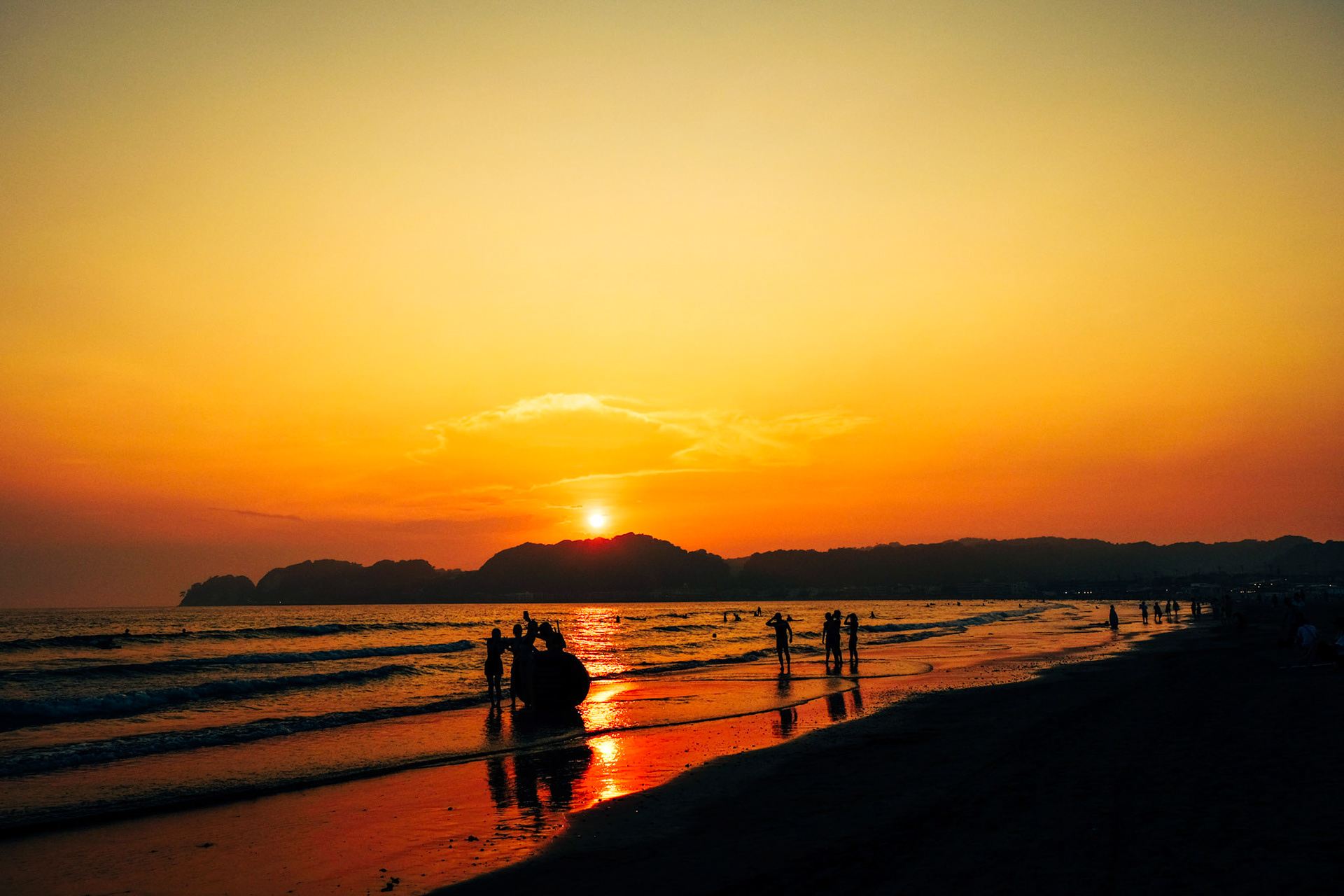
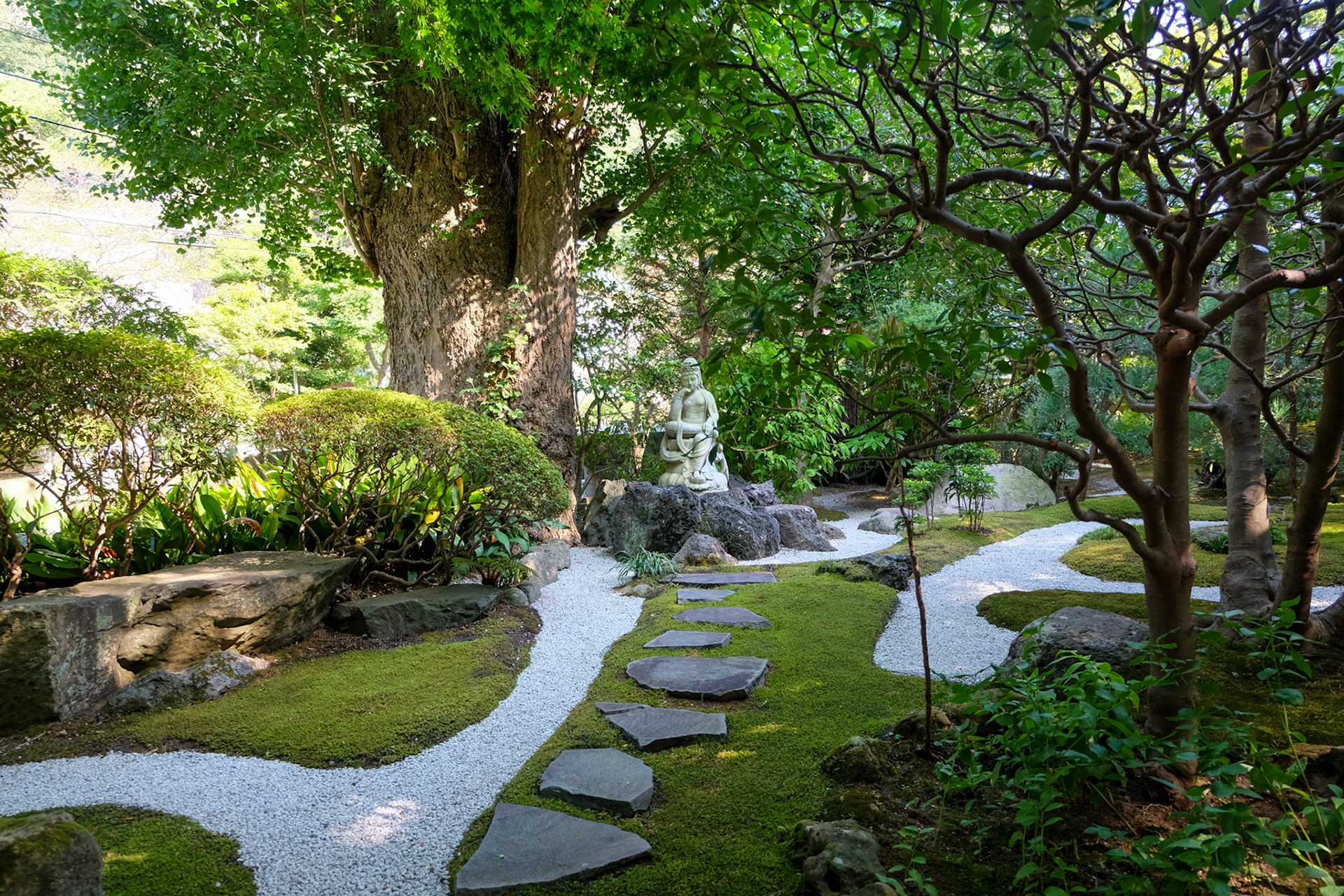
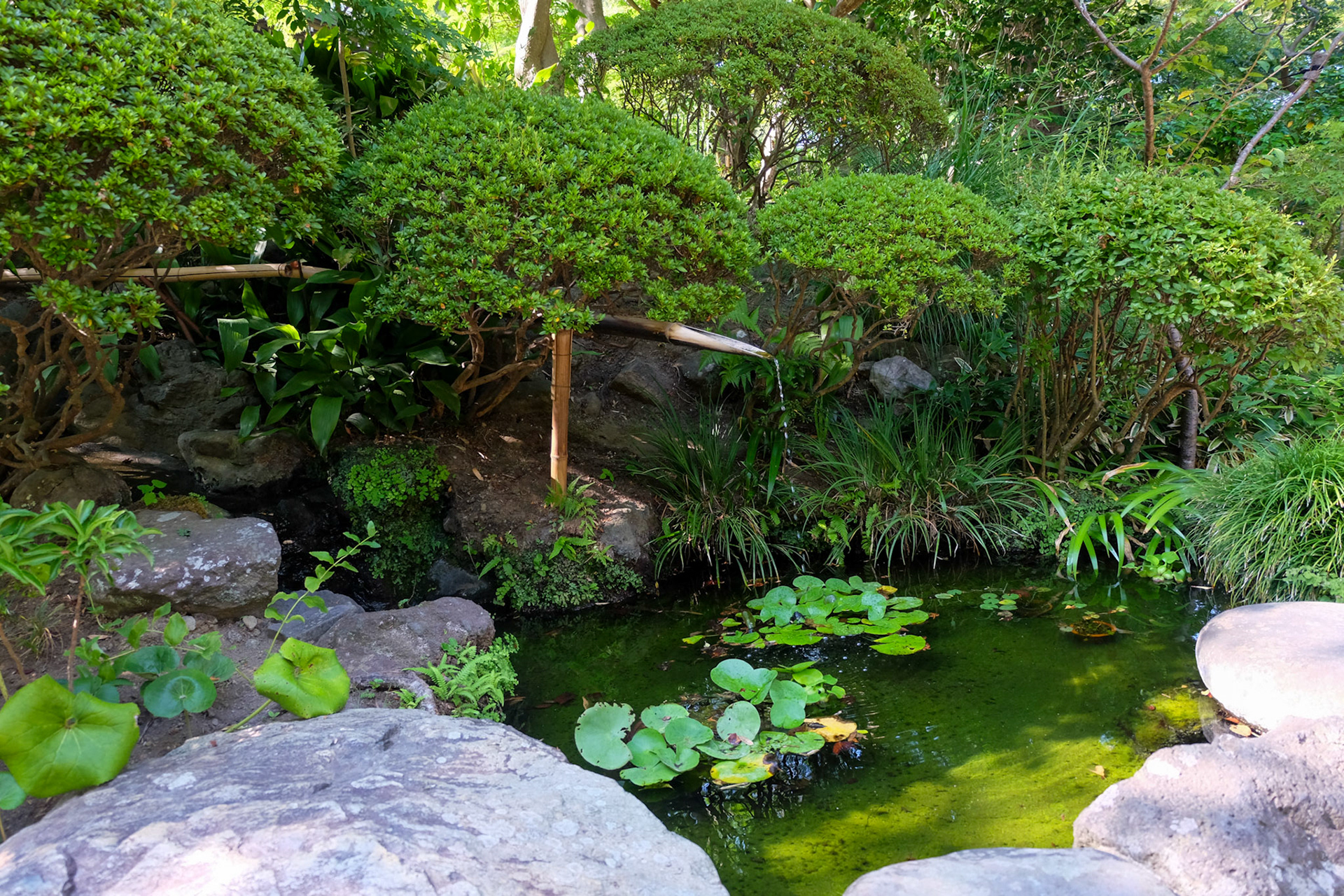
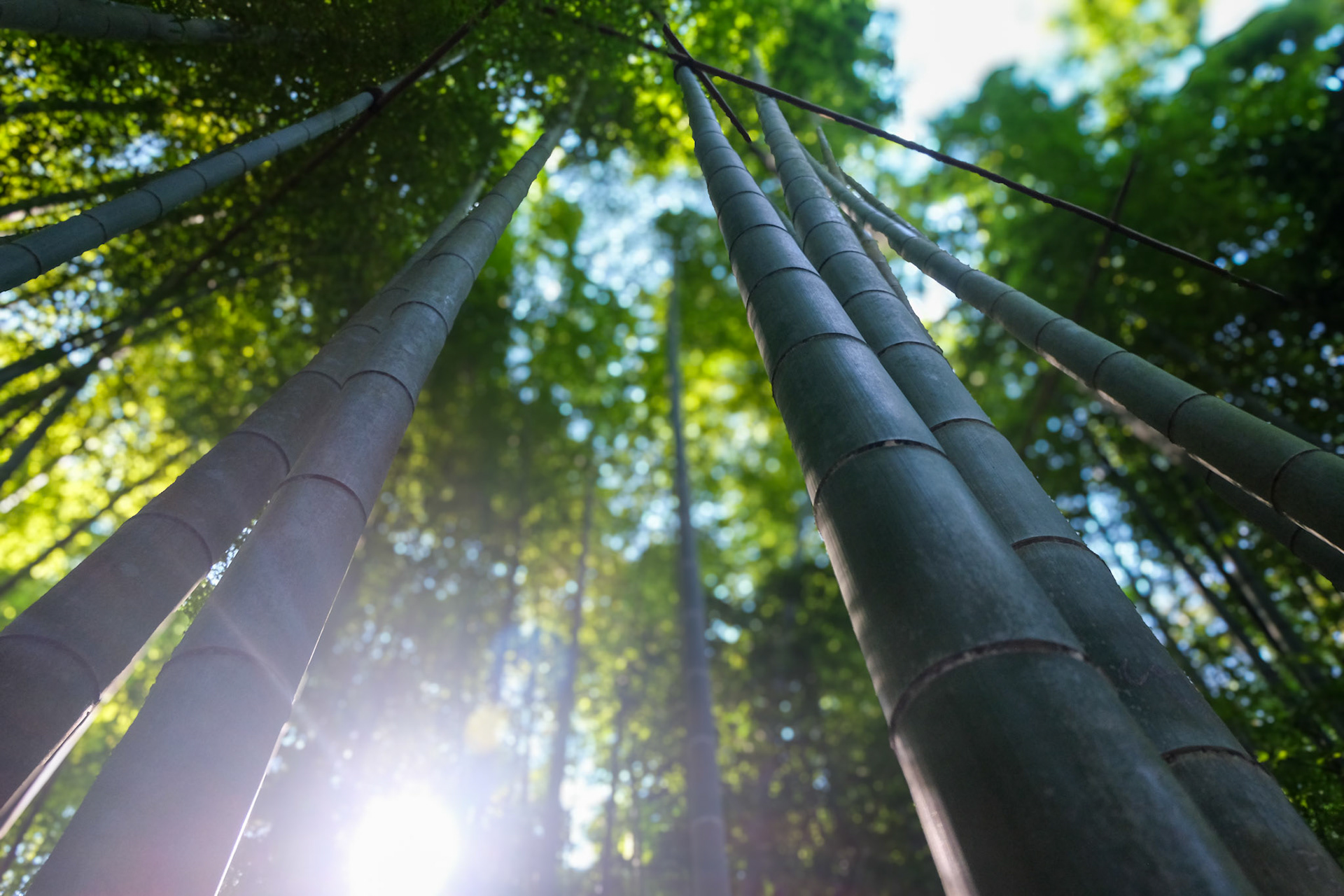
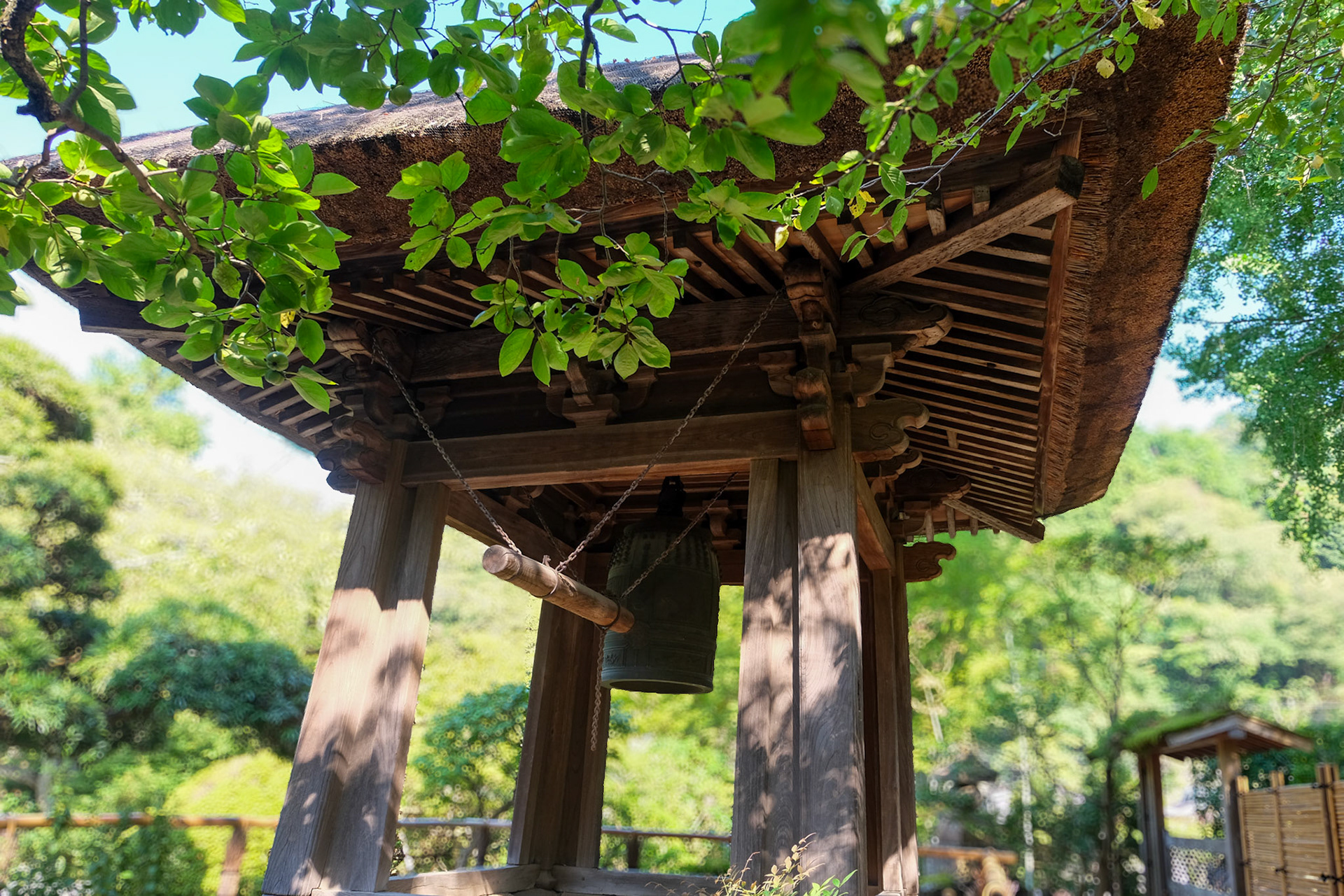
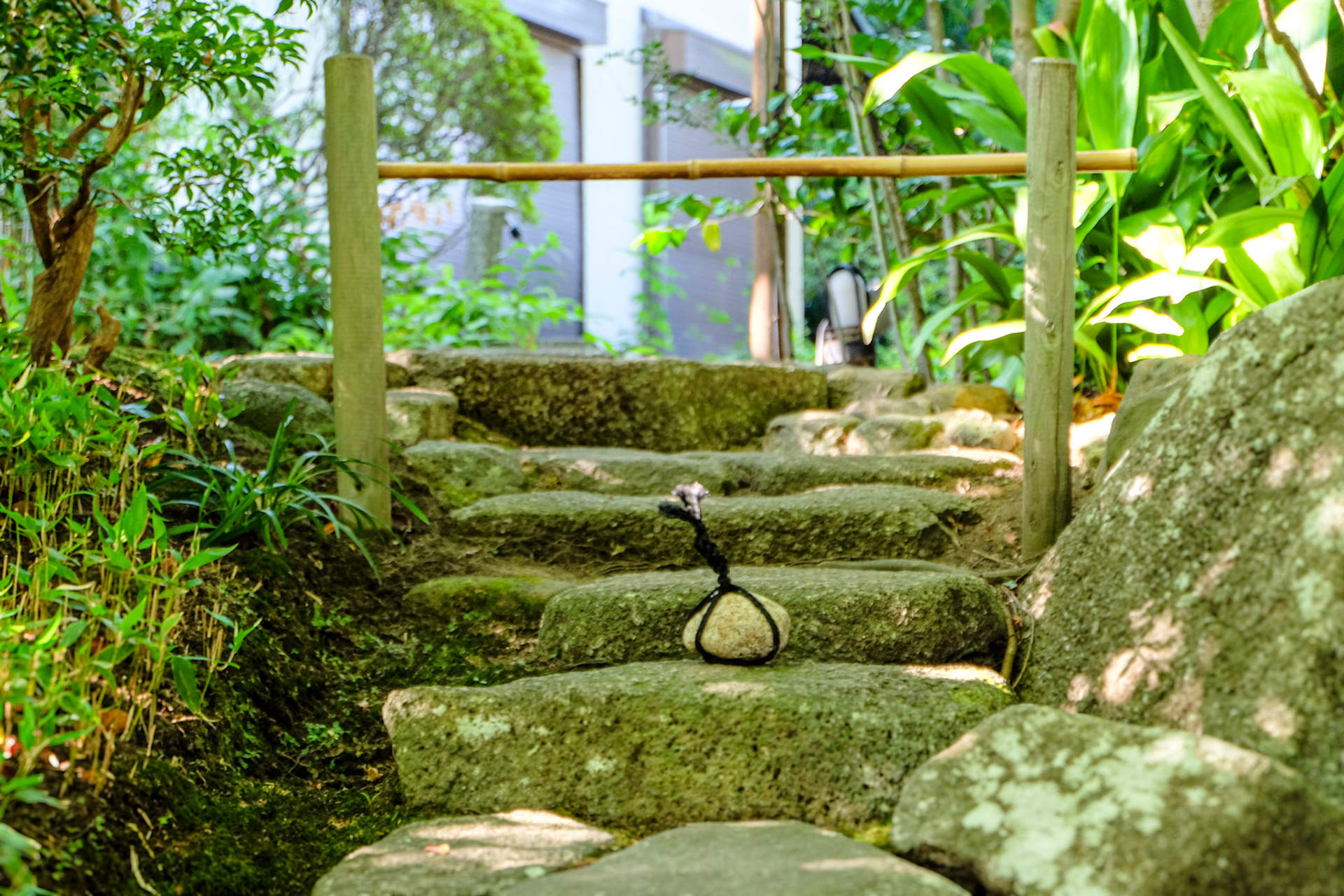
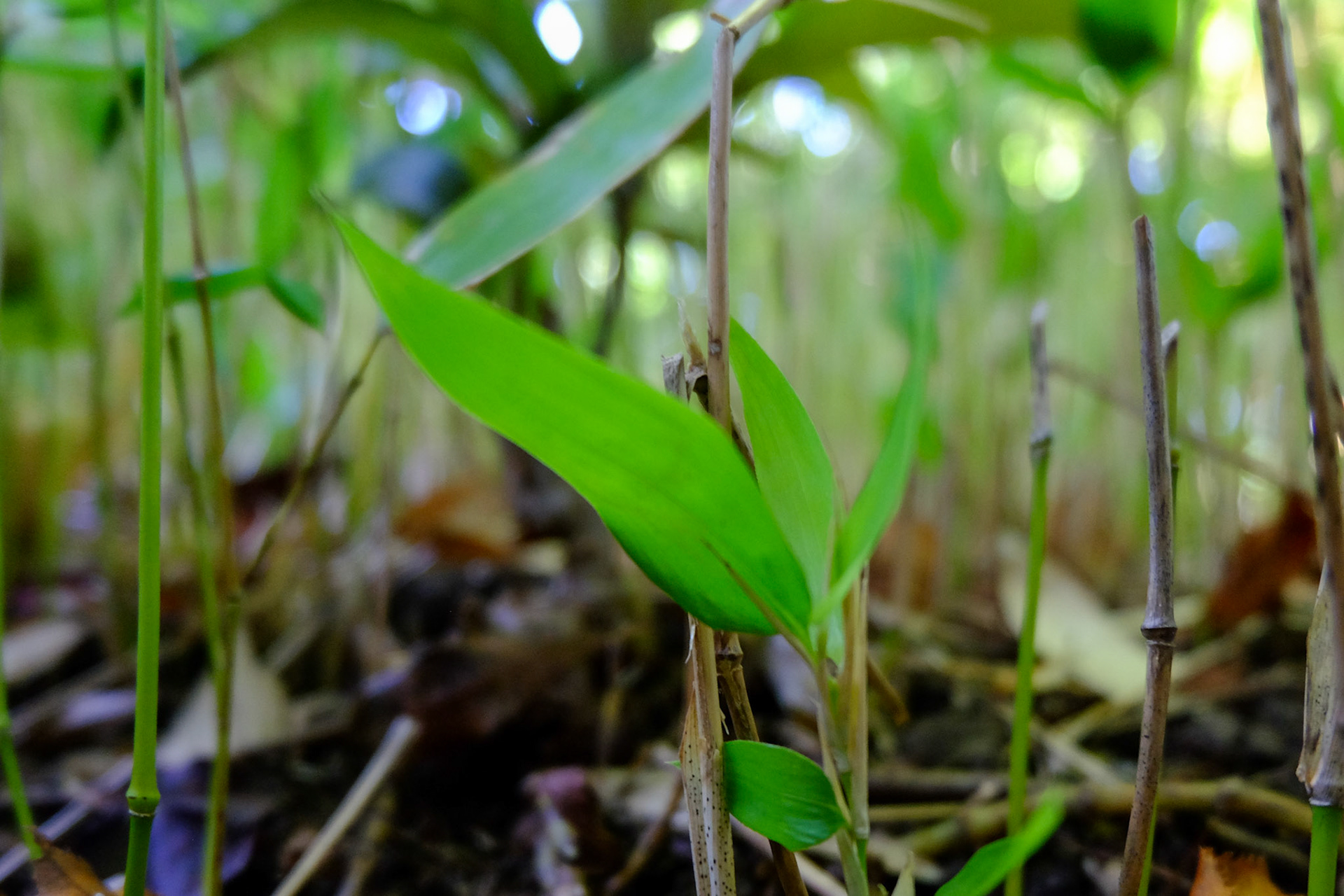
We arrived in Kamakura on a quiet Saturday, coming straight from Kyoto. This would be our home for the next week — a conference ahead — but that first day was just ours. After checking into our first hotel — an old, traditional place that seemed more prepared for weddings than for travellers like us — we took a bus in the afternoon to Hōkokuji Temple’s bamboo forest. Tall green stalks rising endlessly upward, soft light filtering through the canopy, stone paths surrounded by moss. Small details everywhere — simple, yet meaningful — even the tiny young bamboo shoots growing quietly beside the older ones. There was a calmness that made me slow down without even realising it. I had felt something similar walking through the streets of Kyoto, lost in my thoughts… that quiet certainty that I will have to return to Japan one day. It was already getting late to go to the beach, but we decided to take the chance — and arrived just in time for sunset. For the first time in my life, the Pacific Ocean was right in front of me. I come from a place of horizon and sea, and I had already started to miss it. We were at Zaimokuza Beach, right beside Yuigahama. The sky turned golden, the water was warm — so, so good — and the horizon wide and peaceful. Floating there, in the Pacific, with the sun setting and the sky painted in layers of gold, yellow, orange and still blue… without a doubt one of the highest points of this trip. After days of travelling and intense heat, that swim felt like pure relief. A full and beautiful first day in Kamakura. Truly grateful. 🤍 𝐀𝐛𝐨𝐮𝐭 𝐭𝐡𝐞 𝐩𝐥𝐚𝐜𝐞s Hōkokuji (報国寺) is a Zen temple in Kamakura, known for its peaceful bamboo grove with more than 2,000 tall stalks. Often called “The Bamboo Temple,” it belongs to the Rinzai school of Zen and is one of the most serene places in the area. Kamakura was once Japan’s political centre during the Kamakura shogunate (1185–1333). Today, it’s a coastal town where historic temples meet the Pacific Ocean. Zaimokuza Beach, facing Sagami Bay, is especially beautiful at sunset. Later, we learned that many people who work in Tokyo choose to live here or have second homes in Kamakura — an escape from the intensity of the city, just about 30 minutes away by train. Maybe in a future journal, I’ll write about how Kamakura feels a little like Japan’s own version of Miami :)